
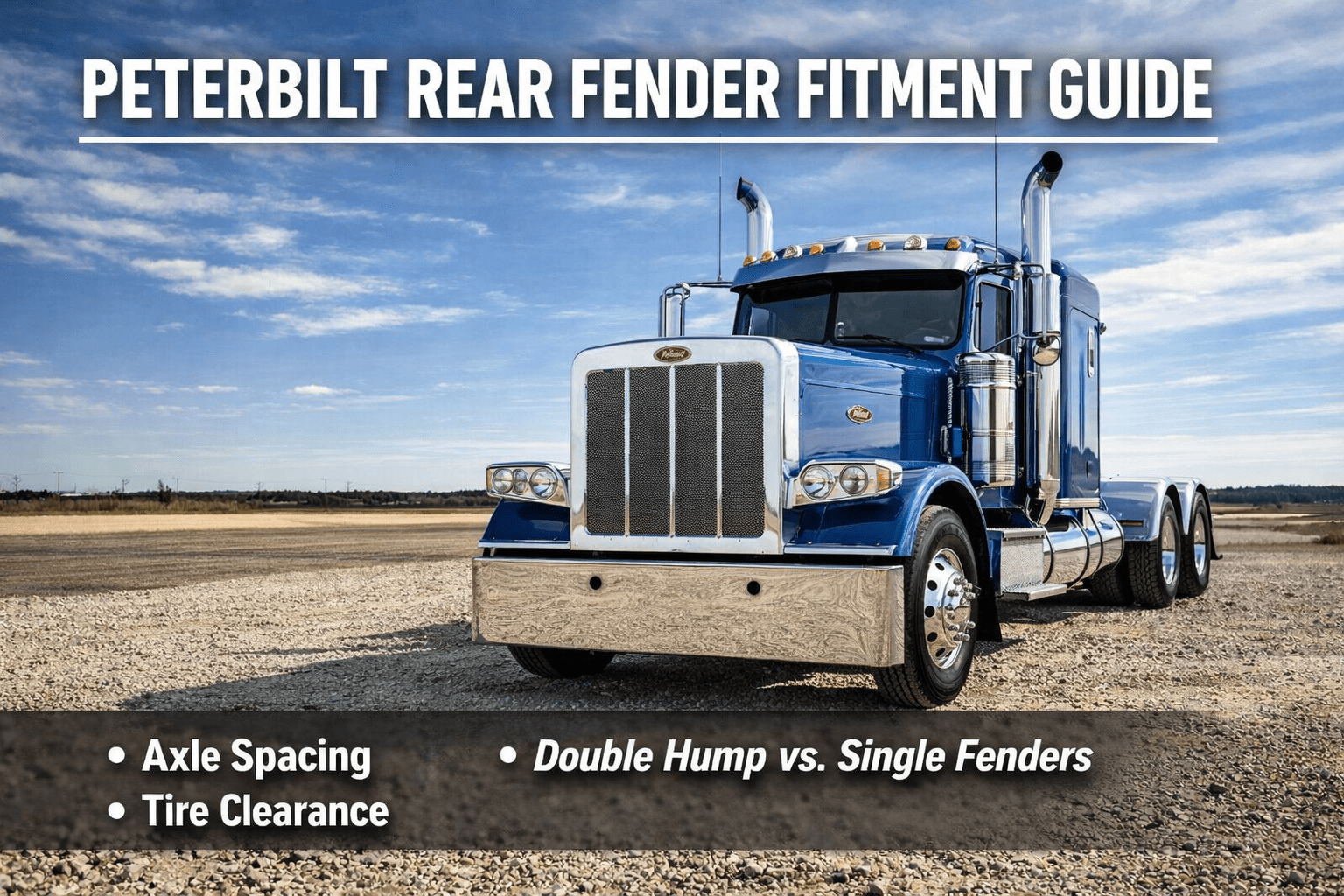
Peterbilt Rear Fender Fitment Guide: Axle Spacing for Peterbilt 379 & 389 Trucks
Choosing the correct rear fenders for a Peterbilt 379 or Peterbilt 389 starts with understanding how the truck’s rear axle spacing, suspension travel, and tire size affect fitment. These classic long-hood trucks share very similar chassis architecture, which means many rear fender setups follow the same sizing rules when axle spacing and tire clearance are confirmed.
The Peterbilt 389 continues the heritage of the iconic 379 platform, maintaining the traditional long-nose design and heavy-duty tandem axle configurations that owner-operators and fleets rely on for highway trucking. Learn more about the Peterbilt Model 389. Peterbilt designed the 389 to deliver high durability and performance with rear axle ratings ranging from roughly 21,000 to 78,000 pounds depending on configuration, allowing trucks to run a wide variety of tandem axle setups.
Because these trucks use similar tandem drive axle configurations, most rear fender systems for the 379 and 389 are designed around a few common axle spacing measurements.
Standard Axle Spacing on Peterbilt Tandem Drive Trucks
Most highway-spec Peterbilt 379 and 389 tractors use tandem rear axles with spacing that typically falls into one of these ranges:
-
52-inch axle spacing (most common highway configuration)
-
54-inch axle spacing
-
60-inch spread axle spacing (specialty or heavy haul setups)
Axle spacing is measured from the center of the forward drive axle to the center of the rear drive axle. This measurement determines the overall length required for double-hump or tandem rear fenders.
According to Peterbilt’s body-builder documentation, final axle spacing can vary slightly based on frame configuration and suspension options, which is why body builders often verify measurements before installing components such as fenders, lift axles, or body equipment.
Rear Fender Styles Used on Peterbilt 379 and 389 Trucks
Rear fenders on Peterbilt trucks generally fall into three main categories depending on the look and the level of spray protection required.
Double Hump Tandem Rear Fenders
The most popular style for custom trucks and owner-operator builds. These fenders cover both rear tires in a tandem setup and are typically sized based on axle spacing.
Benefits include:
-
Maximum road spray protection
-
Classic show-truck appearance
-
Better coverage for wide tires and polished wheels
Single Rear Fenders
These mount individually over each tire and are sometimes used on vocational trucks or fleets.
Advantages include:
-
Easier installation
-
Lower weight
-
More suspension clearance
Quarter Fenders / Half Fenders
Quarter fenders mount to the frame rail behind the cab and provide basic spray control without covering the entire wheel.
They are common on fleet tractors where weight savings and simplicity are prioritized.
Tire Size and Fender Clearance
Most Peterbilt 379 and 389 trucks run 22.5-inch or 24.5-inch wheels, and tire height can vary depending on the tire profile. Fender clearance must account for:
-
Tire diameter
-
Tire width
-
Suspension travel
-
Frame rail height
Air-ride suspensions allow more vertical movement, which means additional clearance between the tire and fender is typically required to prevent rubbing when the suspension compresses.
Peterbilt body builder guides recommend confirming suspension movement and clearances before installing chassis-mounted equipment such as bodies, brackets, or fenders.
How to Measure Your Peterbilt for Rear Fender Fitment
Before ordering rear fenders for a Peterbilt 379 or Peterbilt 389, it’s important to confirm several measurements:
-
Axle spacing (center to center)
-
Tire diameter and width
-
Suspension type (air ride or leaf spring)
-
Frame rail width and mounting location
These measurements ensure proper tire coverage while preventing interference during suspension travel.
Why Axle Spacing Matters for Rear Fender Fitment
Correct axle spacing is the most important factor when choosing tandem rear fenders because it determines:
-
Fender length
-
Mounting bracket placement
-
Tire clearance
-
Overall alignment with the truck frame
Since the Peterbilt 379 and 389 share similar frame geometry and tandem axle layouts, many rear fenders are interchangeable between the two trucks when axle spacing and tire size are confirmed.
For detailed chassis specifications and configuration options, Peterbilt provides technical documentation and body builder manuals that outline frame dimensions, axle layouts, and installation guidelines. View Peterbilt body builder resources